
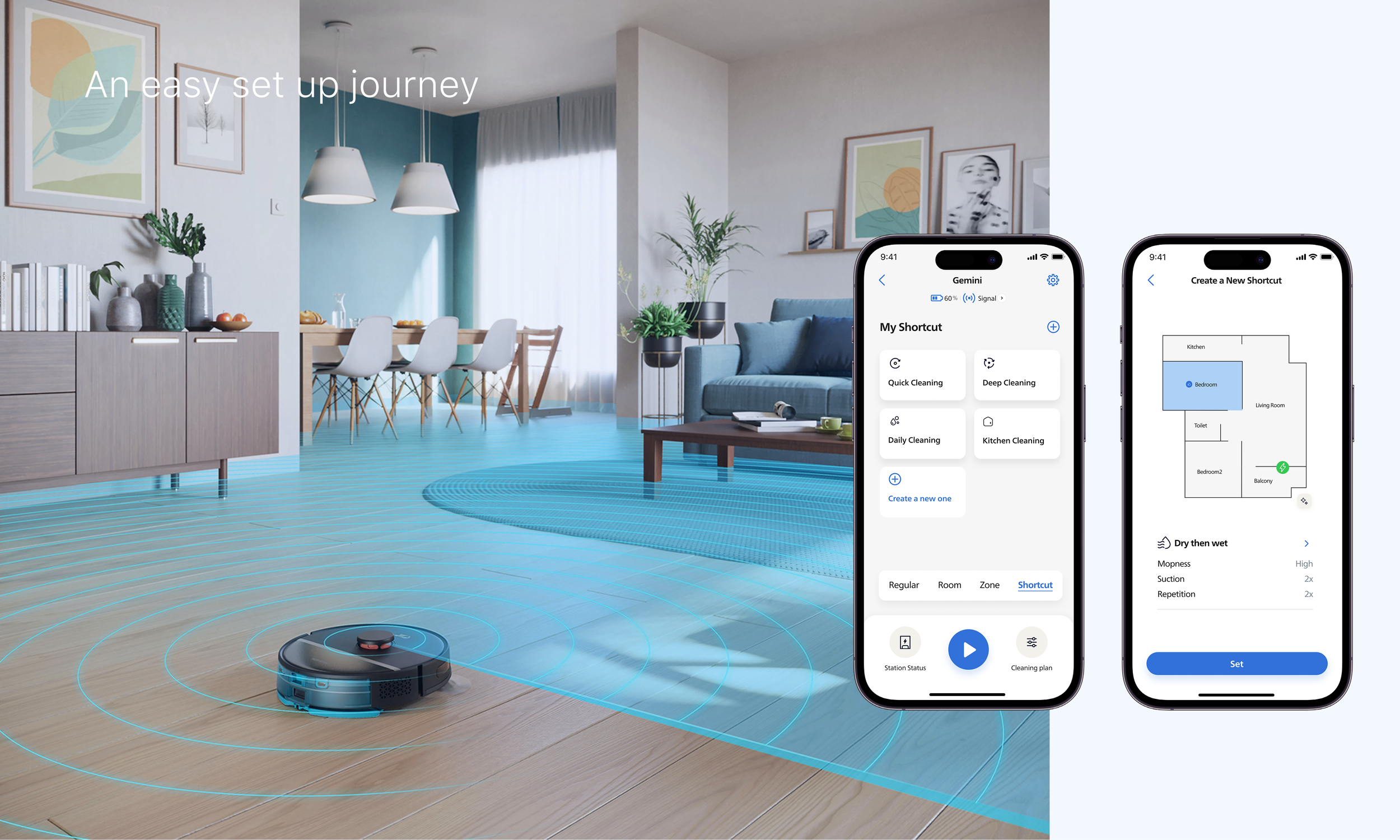
Reframing Interaction for Robot Vacuums
Reducing interaction effort while maintaining user control in AI-assisted cleaning.
User research, UX UI Design, User Testing
Period
May 2025 – June 2025
My Role
End-to-end design process, concept strategy, interaction design

Competitive analysis
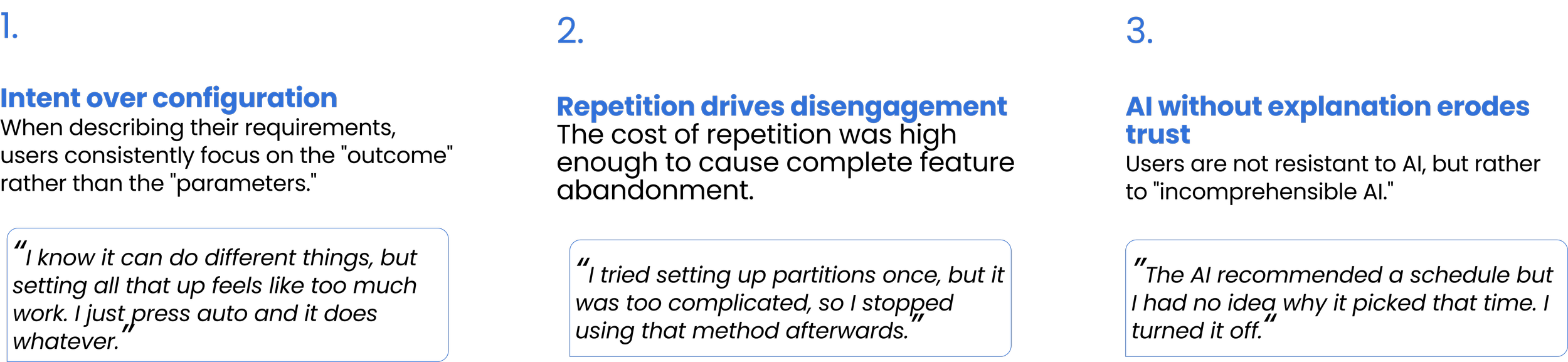
10 Semi-structured Interviews (Novice + Experienced Users)
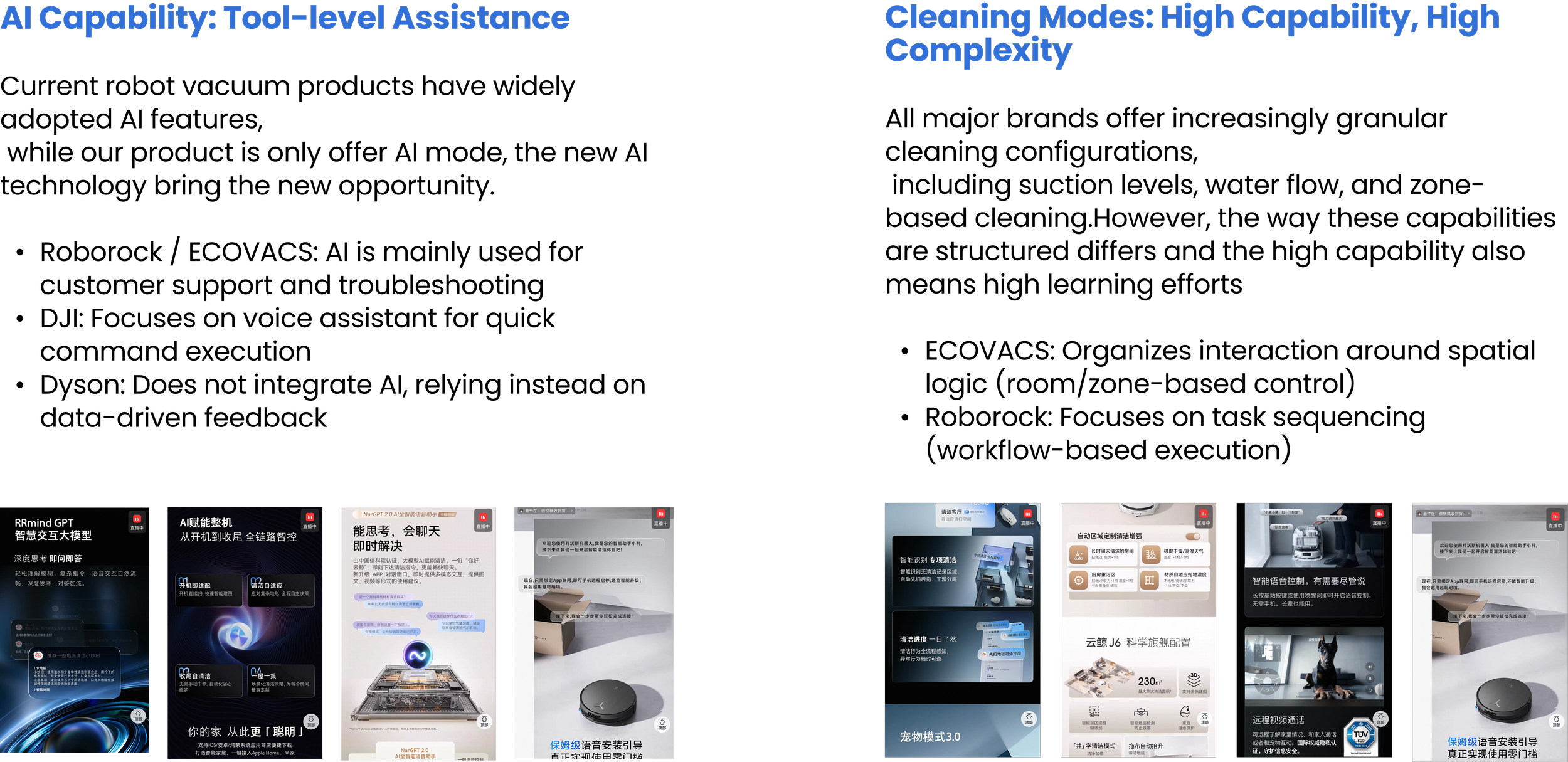
Analysis of Mainstream Competitor Experiences
Analysis of User Reviews and Forum Data
Design Vision
Transform complex cleaning configurations into intuitive, intent-driven interactions, enabling users to achieve desired outcomes with minimal effort while maintaining control and trust.
Concept Development
Brainstorming
Background
With the advancement of smart home technology, robotic vacuums have evolved from mere cleaning tools into sophisticated intelligent systems endowed with highly automated capabilities. Current products typically feature:
Map generation and zone cleaning
Multiple cleaning modes (adjustable suction power, water volume, and cleaning cycles)
AI-assisted functions (voice control, personalized recommendations, and automation)
However, a distinct paradox is emerging
Despite the gradual integration of AI capabilities, user trust in these features remains limited.
This situation results in:
Low utilization rates for advanced features
A user tendency to rely primarily on basic cleaning modes
A failure to translate AI capabilities into tangible, practical value
Research
Core Questions:
This research was conducted to understand how leading robotic vacuum applications handle AI-assisted interactions and customised cleaning workflows. The goal was to identify where existing products fall short of user expectations, and to define the design opportunity for the Gemini app's next generation experience.
How do users currently initiate and configure cleaning tasks across competing apps?
Where does AI assistance add genuine value — and where does it create confusion?
What interaction patterns are universally absent across the market?
Research method
Concept Selection
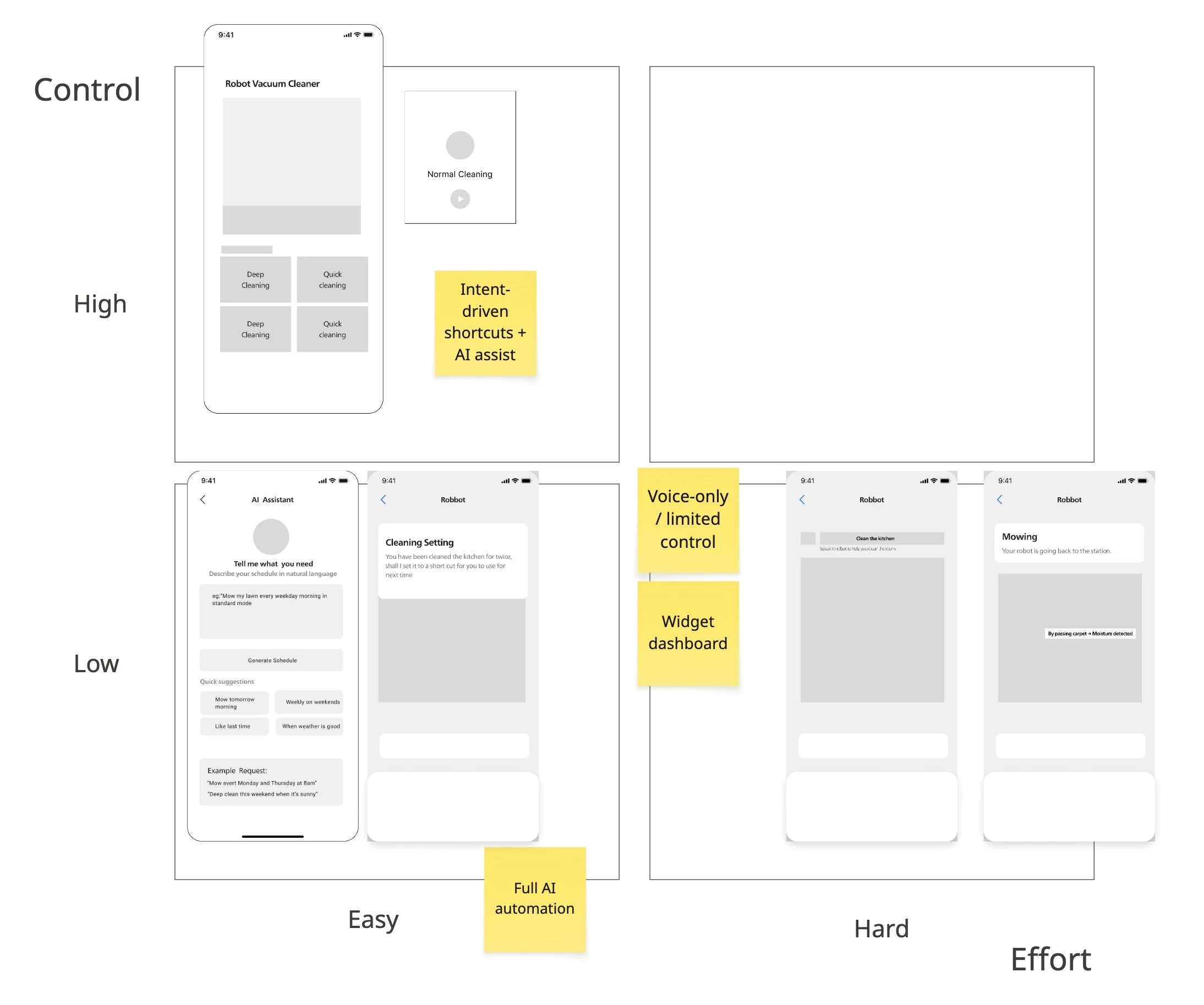
Ideas were clustered across HMWs into three distinct concepts,
each representing a different interaction philosophy.The final concept was selected based on the balance between user effort and control.
The Shortcut + AI approach combines quick access with a clear visual card system,
providing the best balance of low effort, high control, and flexibility.
Market Trend
Interview Insights
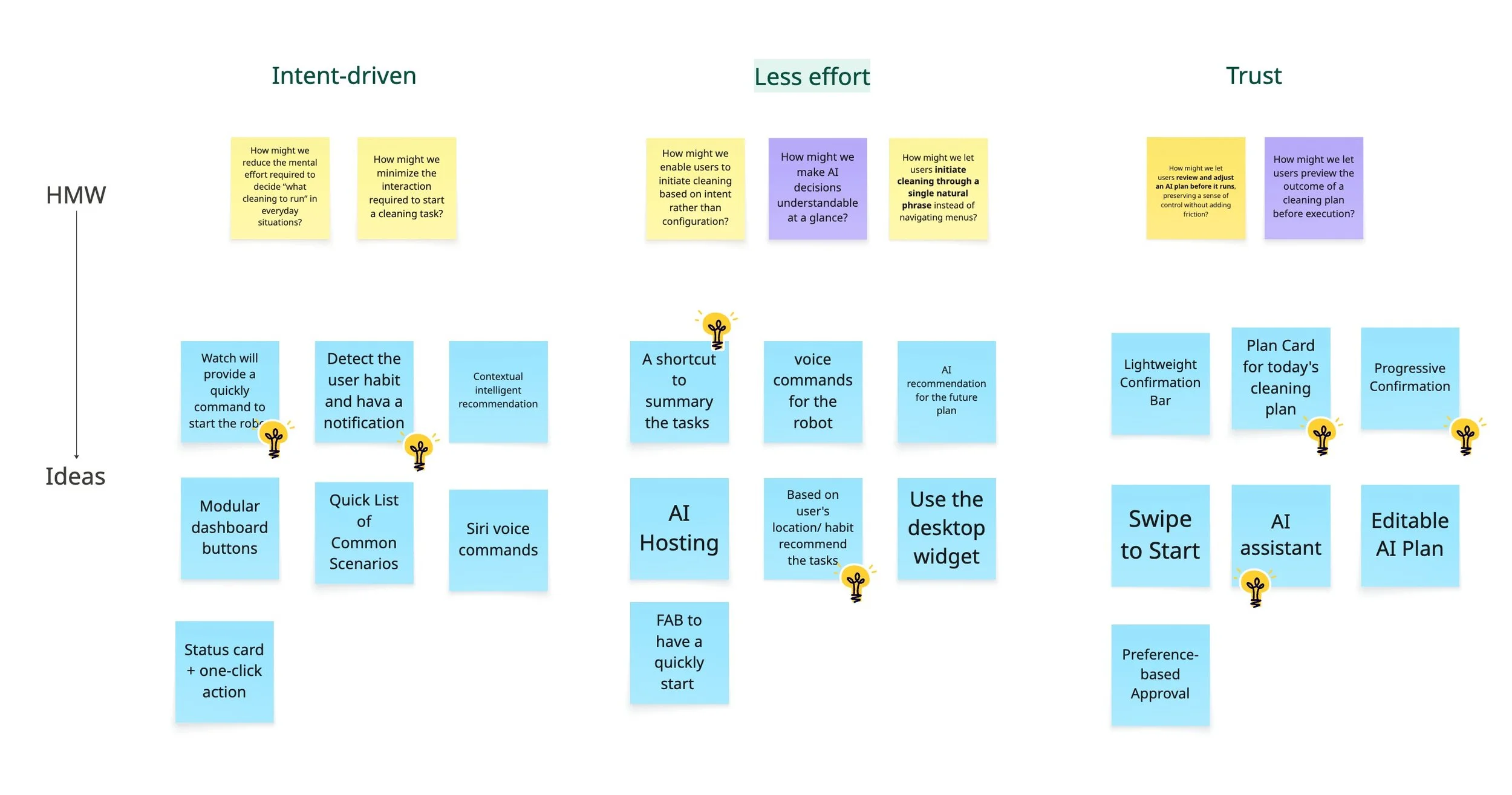
From each insight I generated HMW statements without filtering. The goal at this stage was quantity — I produced 19 HMWs across the three insights, including deliberately wild or technically ambitious ones. A selection of the most generative:
And also based on the HMW, I bring out the ideas
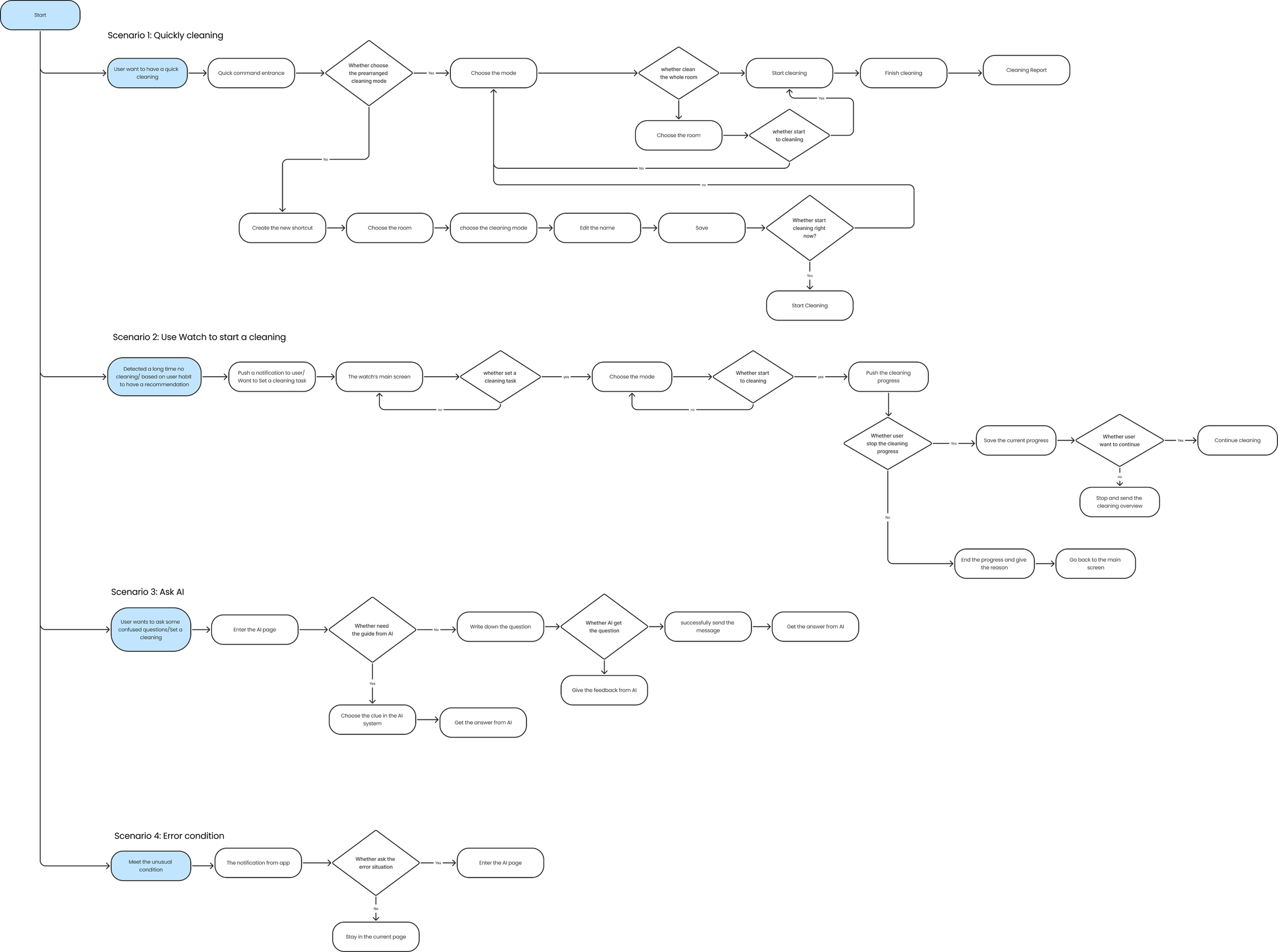
User Flow Chart
Home Page
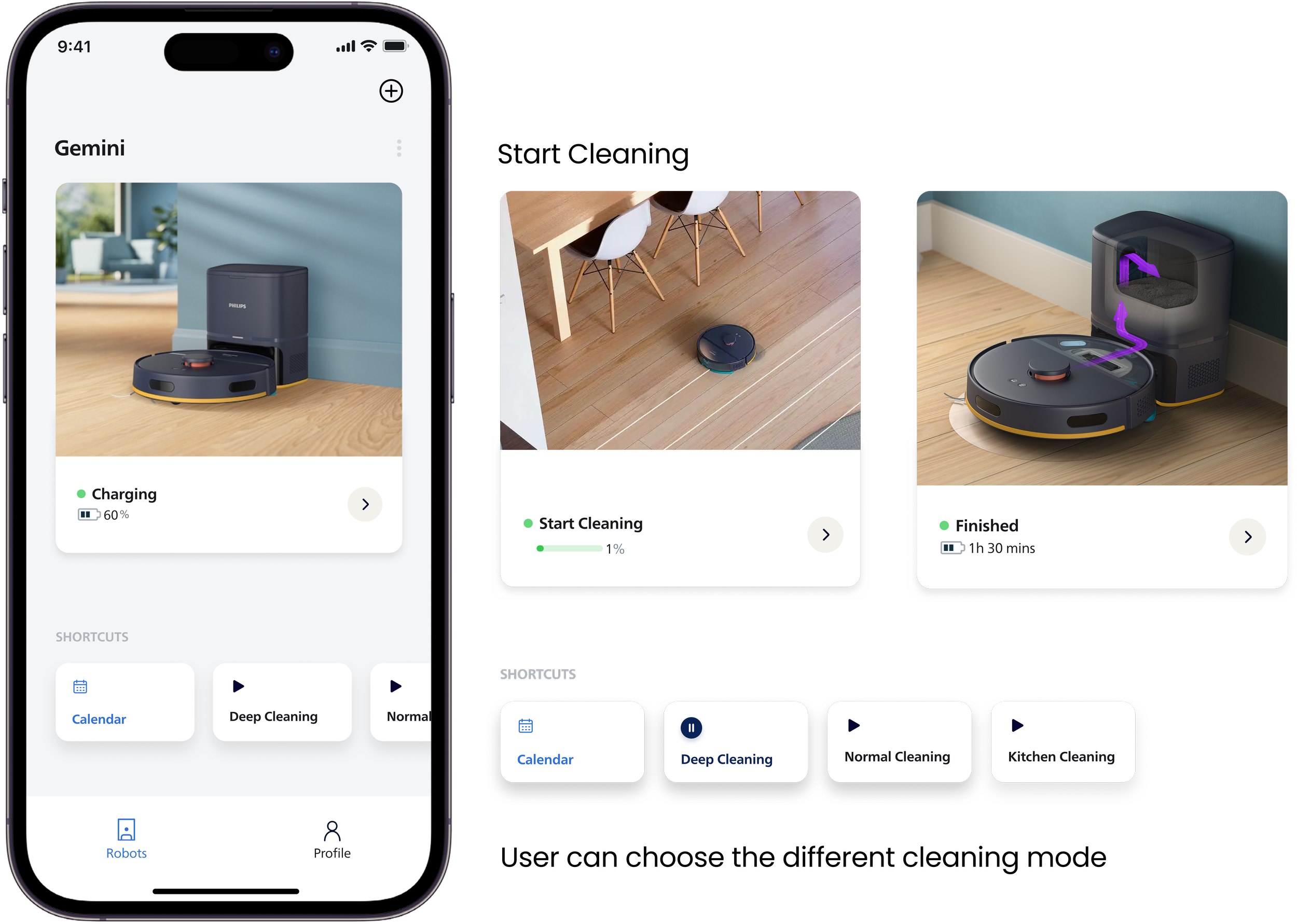
Add the shortcut which can help user to start a quickly cleaning in the home page.Pre-configured bundles of room + mode + intensity. Fast and customization.
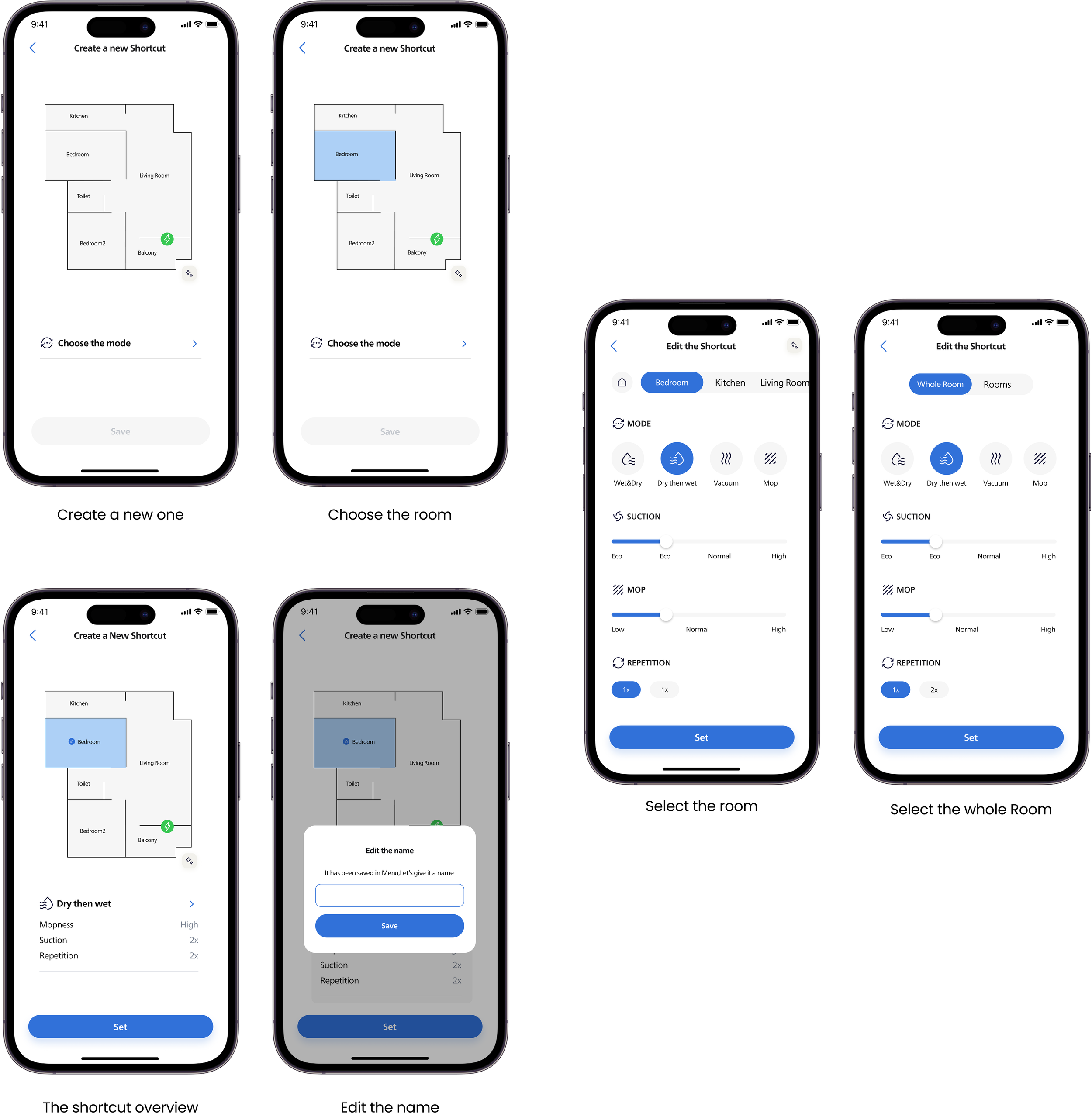
Create a new shortcut
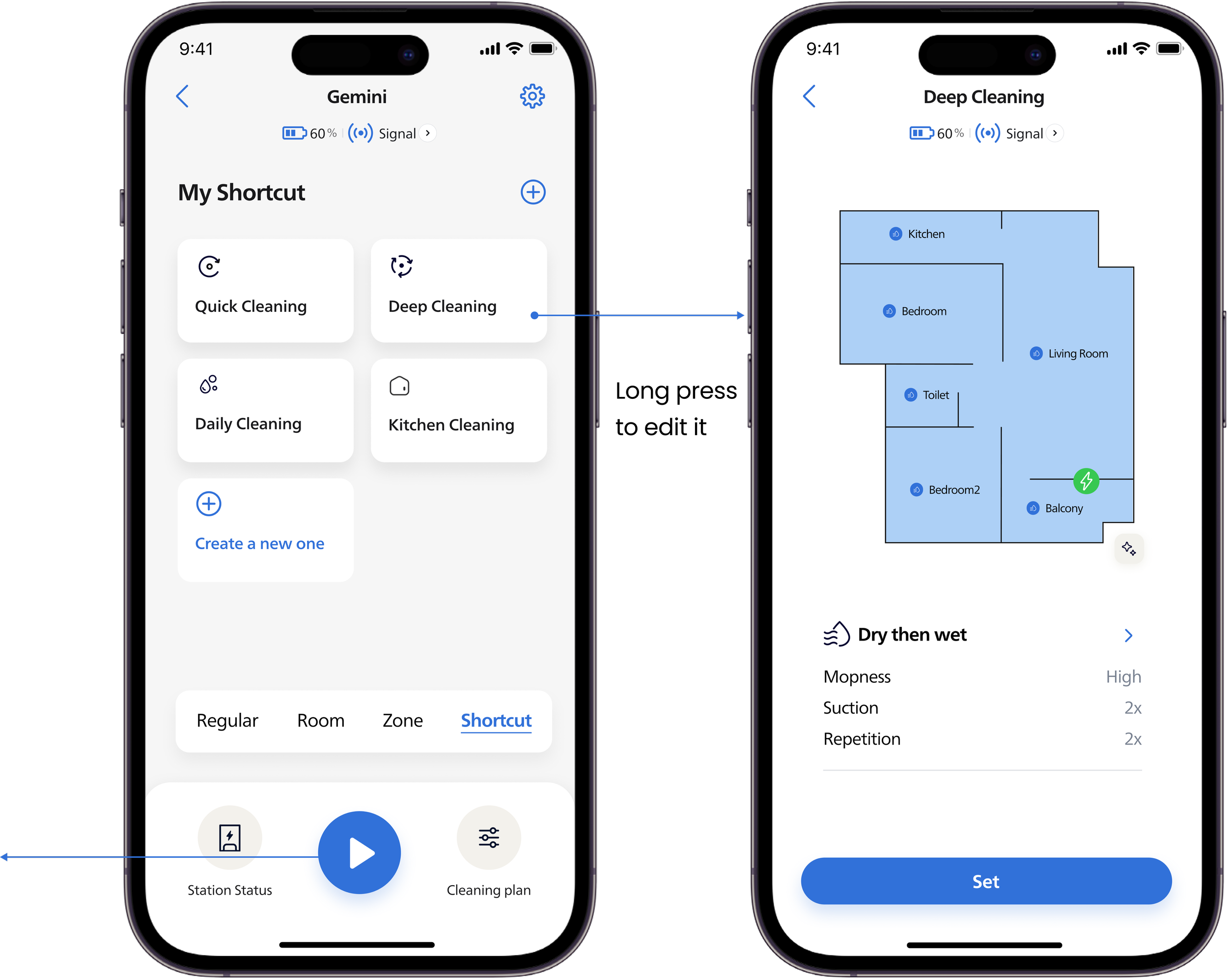
Shorcut page
The system has already set the default shortcut for user to use. User can also create their personal cleaning shortcut.
After user choose the cleaning mode, they can just start cleaning from here
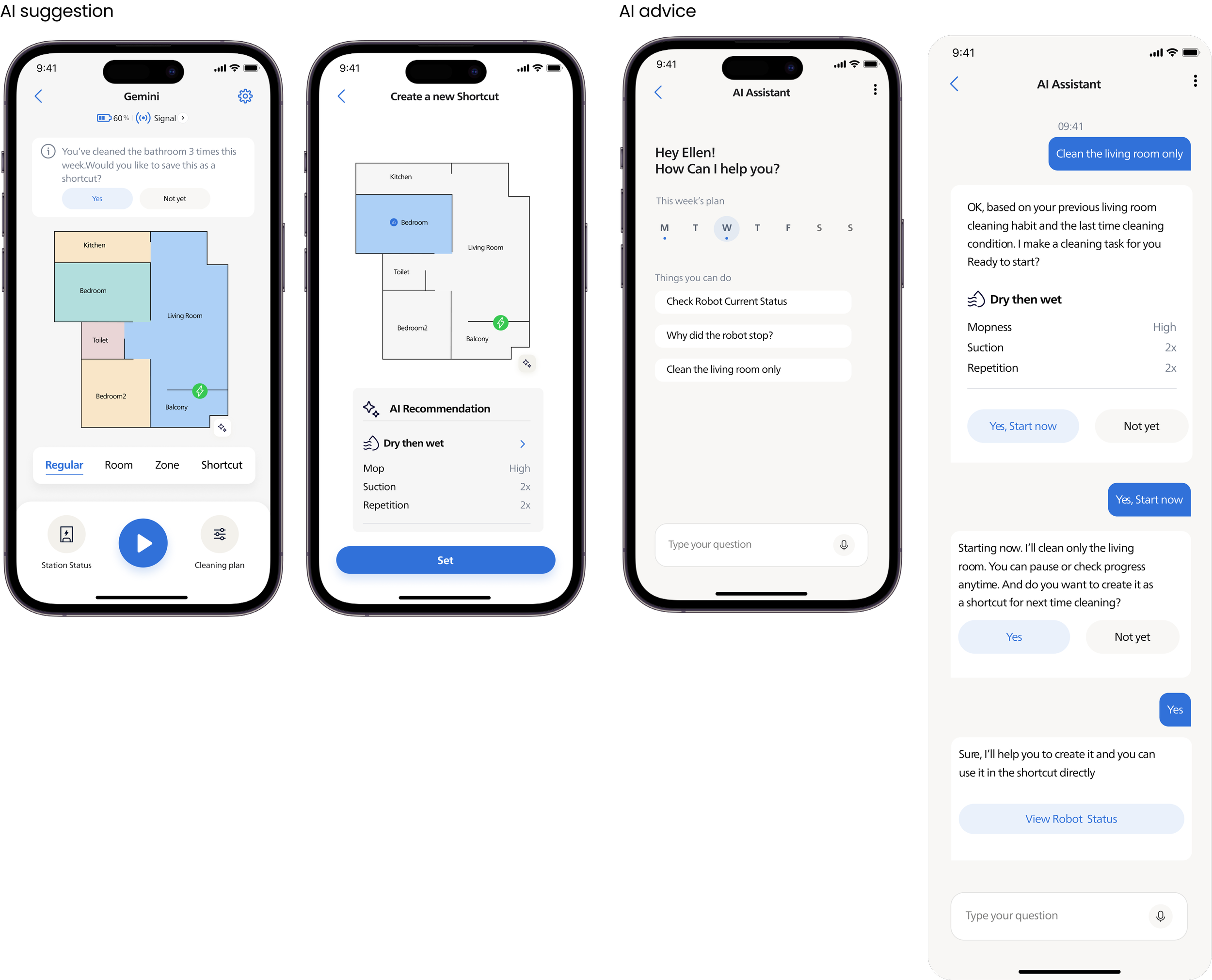
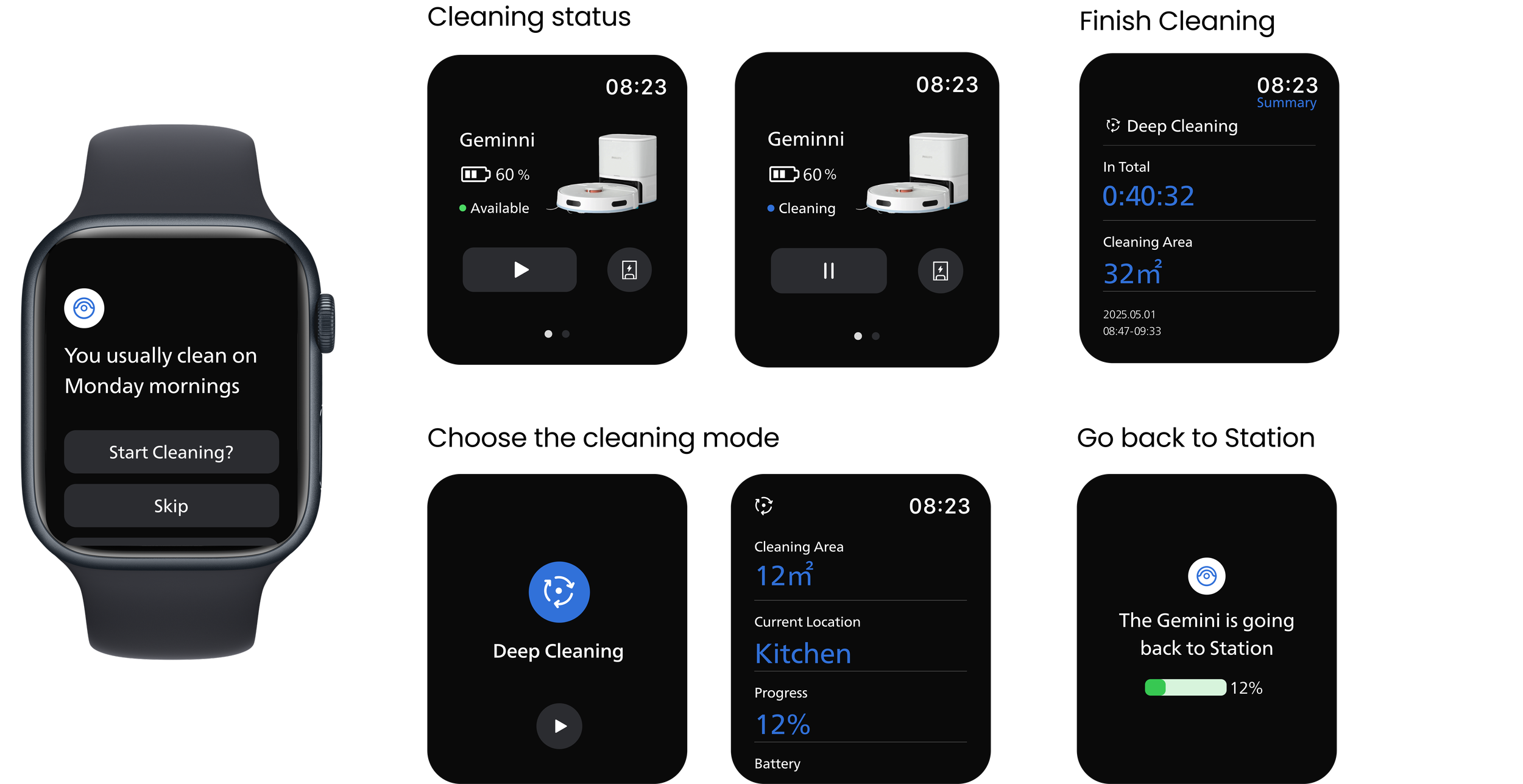
The final design mainly focuses on three scenarios: The shortcut system,The AI assistant (immediate commands),The watch companion
Final Design
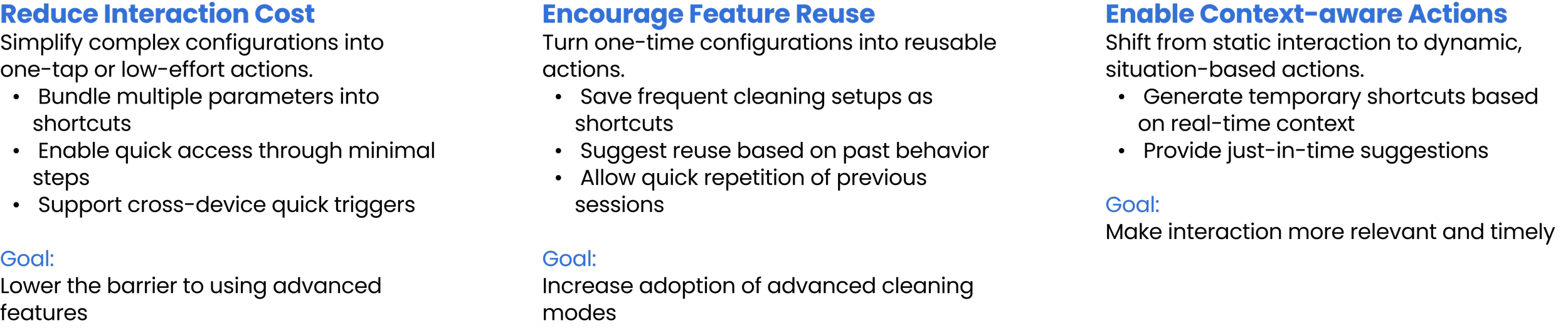
Interaction Strategy
Key Features
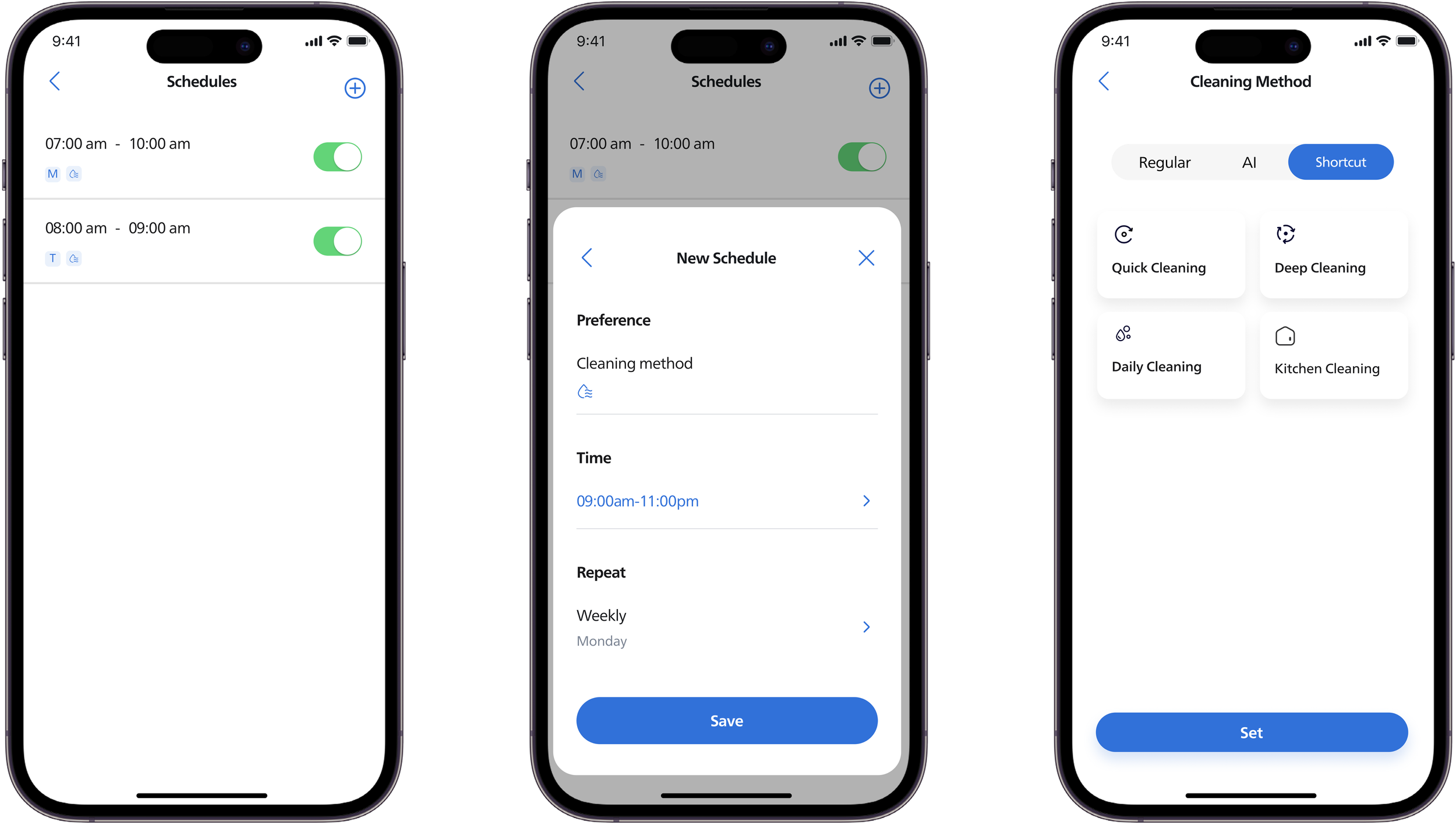
Select Cleaning Mode in the Calendar
For some user, they prefer to schedule their cleaning task previously, the shorcut selection is also engage in the cleaning method options
Watch companion
It surfaces the shortcut library on the wrist for the moments when the phone is out of reach — cooking, exercising, leaving the house.
Add the shortcut which can help user to start a quickly cleaning in the home page.Pre-configured bundles of room + mode + intensity. Fast and customisable.
AI Assistant
For some user, they prefer to schedule their cleaning task previously, the shorcut selection is also engage in the cleaning method options